The fleet manager wants the same diesel fill every Friday. You already know the yard. You already know the tanks. The order still arrives as a voicemail while you are on a different route.
In a one-truck shop, the owner is the dispatch desk. If the only way to take that standing fill is a call that rings the cab, you will miss it. The yard will find another truck for the next Friday.
The 0918 post on this site was harvest diesel. The 0919 post was the construction pour. This is the account that is still there in November. A fleet yard does not wait for you to get back to the shop to write the ticket.
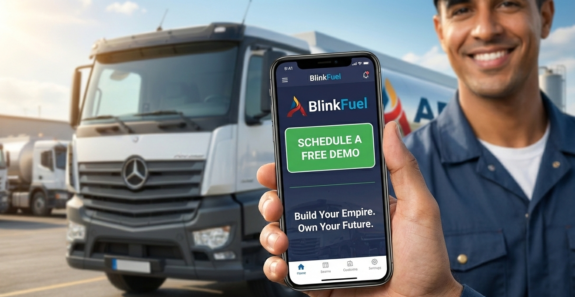
Blink Fuel is the software for that job. It is a white-label gasoline and diesel delivery platform under your name. A Blink Fuel subscription is the product. Blink Fuel does not deliver the fuel. You still own the truck, the product, the insurance, and the permit. What the platform does is take the desk job so a one-person shop can still say yes to a standing fill.
The order has to exist before Friday morning
A mobile fuel order is a loop. The customer picks diesel or gasoline, a place, and a window, then pays in the app. Someone has to see that order, put it on a truck, and close the drop. In a bigger shop, that someone is a dispatcher. In a one-truck shop, that someone is you.
A fleet fill compresses the loop in a different way than a pour. The yard wants the same gallons on a rhythm. The gate code may change. The tank that was on the east fence last month may have moved. A fleet manager who can place the fill from the yard, without catching you between stops, is a customer you can keep.
If they have to wait until you are back at the shop to write the ticket, they often find another truck for the next cycle.
The launch page on this site is clear. A launch means a customer can order. Your board sees it. Your driver phone takes the stop. You keep the record. Blink Fuel does not sell you a territory, and it does not put a dispatcher on payroll for you.
What the software does instead of a desk
The customer app carries your logo and your company name. It lists under your brand. Customers see you, not Blink Fuel.
The admin dashboard is the office view of orders, routing, and reporting. You can assign a stop, watch the driver, and watch the order from open to delivered. Push notices cover confirmation, dispatch, and delivery. Live tracking shows progress, so you are not the person typing ETAs between fills.
The driver phone is the other half. You get the stop, run the route, and mark the drop complete. You can start with one location. The same board still works if you add a second truck later. The platform does not require a person sitting at a desk for the order to exist.
Orders can be requested when the customer needs them, or scheduled. Recurring delivery exists for a yard that wants the same fill on a rhythm and does not want to call it in each time. That is the Friday fleet account. That is also a job-site generator that will be there for weeks. The construction pour from last night is a one-shot window. The fleet yard is a calendar.
What you still have to own
Software does not skip the hard parts. You need permission to haul and sell fuel where you work. You need insured trucks, product supply, and a trained driver. The app is not a fuel license, a hazmat card, or a local permit. Check the current code with your counsel and your local authority.
Blink Fuel does not sell you customers, accounts, or a territory. It does not promise revenue. Results depend on your market, your equipment, your costs, and how you run the day. That split is the honest one. The software is the order-to-truck loop. The business is yours.
A Friday will still be a Friday. The difference is whether the fill request existed on your board while you were already out, or whether it died in a missed call.
What to do Monday morning
If you are the person who both drives and answers, try this.
1. Count how many standing fleet or yard fills you took last month only because someone caught you between stops. Count how many you missed.
2. Write down who owns a failed payment, a closed gate, and a spill kit. The app will not invent that playbook.
3. On a demo, place a recurring diesel order in a branded app. Watch the driver phone take that stop. Complete the drop and find the record on the board. If a screen is missing, you are not ready to launch.
4. Keep the first week small. Run a real order on a truck you control. Pull the record. Then take the next Friday.
If you want that loop on your phone instead of waiting until you are back at the shop, request a Blink Fuel subscription demo or see the features list. How to launch a branded fuel delivery app is on this site when you want the longer walkthrough.
This page is for U.S. fuel operators. It is not a consumer offer and it is not legal advice. Confirm permits, insurance, and the current code before you take a load.